
The MITRE ATT&CK framework is an essential resource in the world of cybersecurity, offering numerous free tools and resources to help you understand, detect, and counter cyber threats. Whether you’re a cybersecurity expert or simply curious to learn more, our Top 10 list will provide you with valuable information and resources.
MITRE ATT&CK Database
The ATT&CK database is a comprehensive repository that details the tactics, techniques, and procedures (TTPs) used by cybercriminals.
1. THE SITE MITRE ATT&CK :
The primary source of information on attack techniques, providing a detailed overview of the various TTPs used by adversaries.
2. ATT&CK NAVIGATOR :
A visualization and exploration tool that allows you to create custom views of ATT&CK techniques and tactics.
Adversary Simulation Tools
These tools make it possible to simulate cyberattacks to test defenses and improve incident preparedness.
3. CALDERA:
CALDERA, developed by MITRE, is an open-source platform designed to automate security testing by simulating attacks based on the MITRE ATT&CK framework. It enables security teams to test their defenses against realistic scenarios, identify vulnerabilities, and strengthen their defense strategies. CALDERA’s key features include attack simulation, test automation, detailed reports, an intuitive interface, and the ability to create custom scenarios. Used for penetration testing, detection system validation, and incident management, CALDERA helps assess the effectiveness of security measures, optimize detection rules, and improve the preparedness and responsiveness of incident response teams.
4. ATT&CK EVALUATIONS:
ATT&CK Evaluations, a MITRE program, tests and evaluates security solutions using attack scenarios based on the MITRE ATT&CK framework. This program allows companies to see how different security solutions perform against real-world attack techniques, providing transparency and valuable insights into the effectiveness of cybersecurity products. The evaluations are conducted in controlled environments, and detailed results are published to help organizations compare and select the tools best suited to their specific needs. ATT&CK Evaluations thus provides valuable assistance in strengthening defense strategies by identifying the strengths and weaknesses of existing security solutions.
5. METTA:
METTA is an information security training tool that uses Redis/Celery, Python, and Vagrant with VirtualBox to simulate attackers. This project allows you to test host-based instrumentation and, depending on the configuration of the virtual machines, also test network-based controls and detection mechanisms. METTA works by parsing YAML files containing actions and uses Celery to queue these actions and execute them one by one, without manual interaction. This tool is particularly useful for cybersecurity professionals who want to validate the effectiveness of their detection and response systems by simulating realistic attack scenarios and identifying potential vulnerabilities.
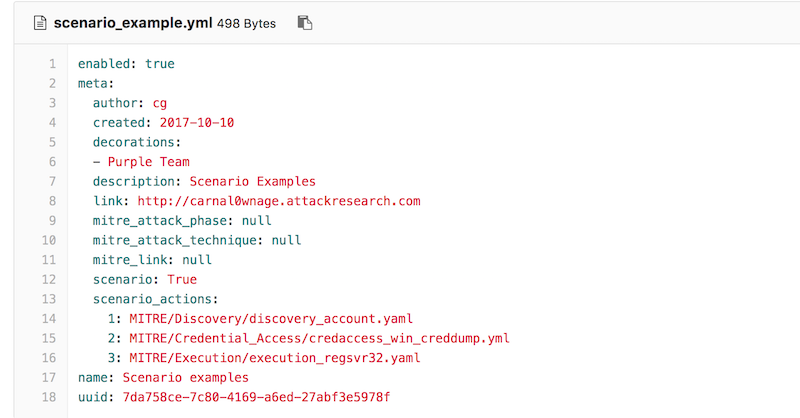
Sample scenario – METTA (source: GitHub)
6. ATOMICRED TEAM:
Atomic Red Team is an open-source library of simple, targeted security tests that simulates specific attack techniques described in the MITRE ATT&CK framework. Designed to be easy to use for cybersecurity professionals, Atomic Red Team offers predefined scripts that can be quickly executed to verify the effectiveness of incident detection and response systems. Each test, or “atomic attack,” is self-contained and can be run without requiring complex configuration, making it a practical tool for validating defenses and identifying gaps in security coverage. By incorporating these tests into their regular processes, security teams can continuously assess and improve their security posture in the face of evolving threats.
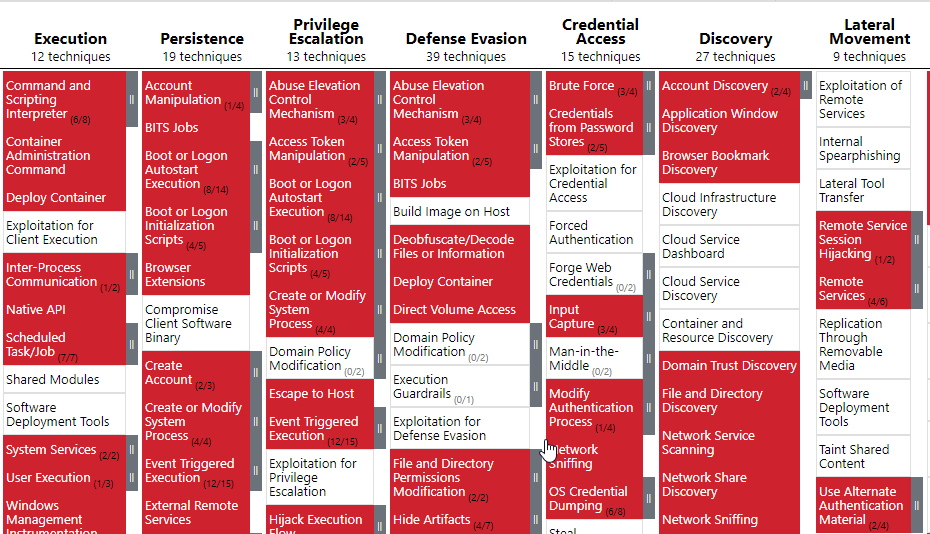
Coverage of nuclear tests (source: Atomic Red Team)
7. RED TEAM AUTOMATION (RTA):
Red Team Automation (RTA) is a collection of scripts designed to automate security testing and evaluate the detection capabilities of defense systems. Based on the MITRE ATT&CK framework, RTA enables security teams to simulate specific attack techniques efficiently and without manual intervention. By running these scripts, cybersecurity professionals can quickly identify vulnerabilities and gaps in their detection strategies. RTA is particularly useful for regular, automated testing of security systems, enabling teams to maintain a proactive security posture and ensure that their defenses remain robust against emerging threats. By integrating RTA into their security operations, organizations can improve their resilience and their ability to respond to incidents in real time.
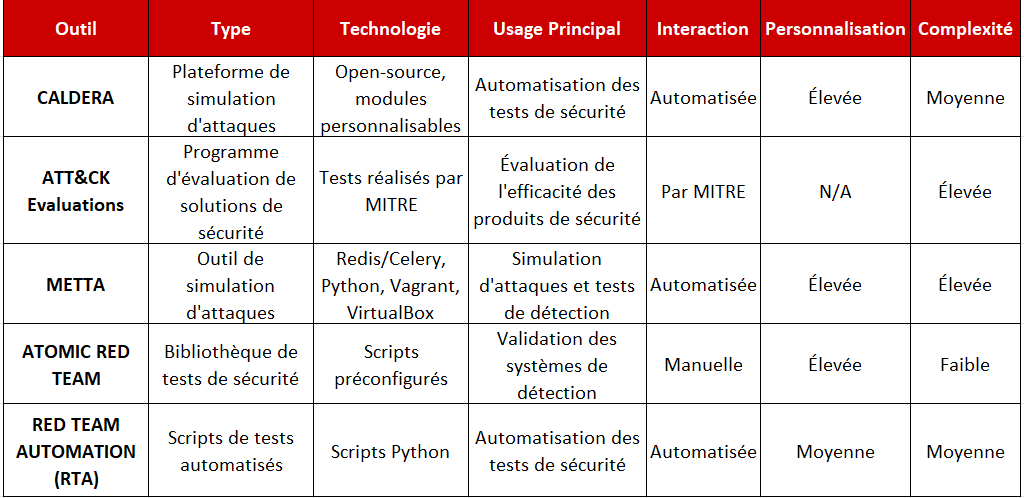
Comparison of these 5 simulation tools by ITrust:
Mapping and Analysis Tools
3 complementary tools for understanding and visualizing how different attack techniques are related.
8. ATT&CK WORKBENCH
ATT&CK Workbench isan open-source tool designed to facilitate the creation, maintenance, and sharing of extensions to the ATT&CK database. It enables cybersecurity professionals to customize and enrich the available information by adding techniques specific to their environments or industries. Workbench offers an intuitive interface for managing and viewing these extensions, enabling defenses to be better tailored to the unique threats an organization may face.
9. ATT&CK Data Sources
ATT&CK Data Sources, meanwhile, provides detailed information about the data sources that can be used to detect the techniques described in ATT&CK. By identifying which data is relevant to which attack techniques, this tool helps security analysts effectively configure their detection systems and prioritize data collection and analysis. By using ATT&CK Data Sources, security teams can improve their ability to detect malicious activity in real time and respond more proactively to threats.
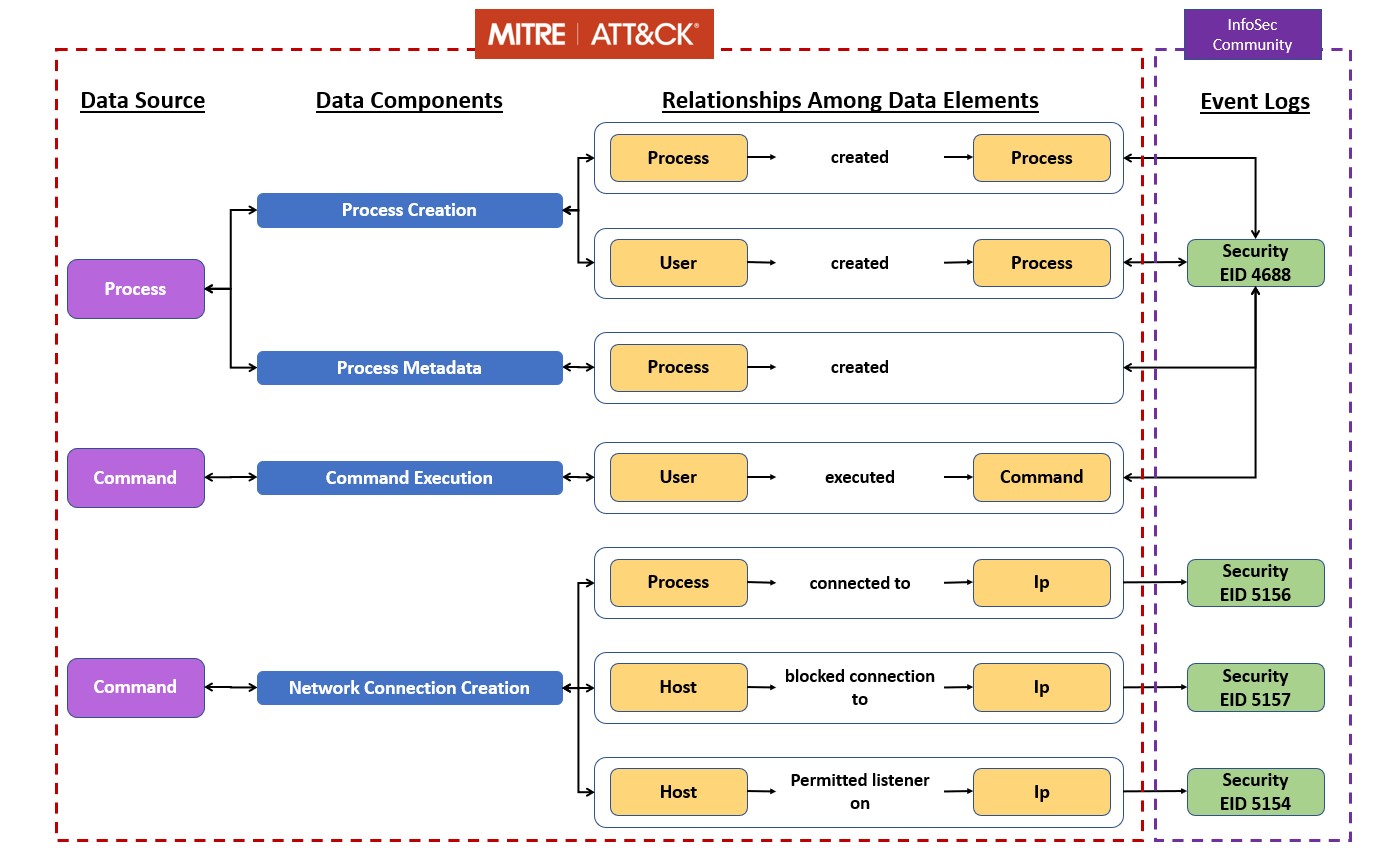
Attack Data Sources: MITRE Attack (Source: GitHub)
10. MAPPING CVE TO MITRE ATT&CK
The "Mapping CVEs to MITRE ATT&CK" project aims to link vulnerabilities (CVEs—Common Vulnerabilities and Exposures) to the attack techniques described in ATT&CK. This project makes it easier to identify attack techniques associated with specific vulnerabilities, thereby helping vulnerability management teams prioritize patches based on the most common attack techniques. The tool’s interface allows users to search for CVEs and immediately see which ATT&CK techniques are linked to those vulnerabilities, providing a clear view of the risks and necessary mitigation measures.
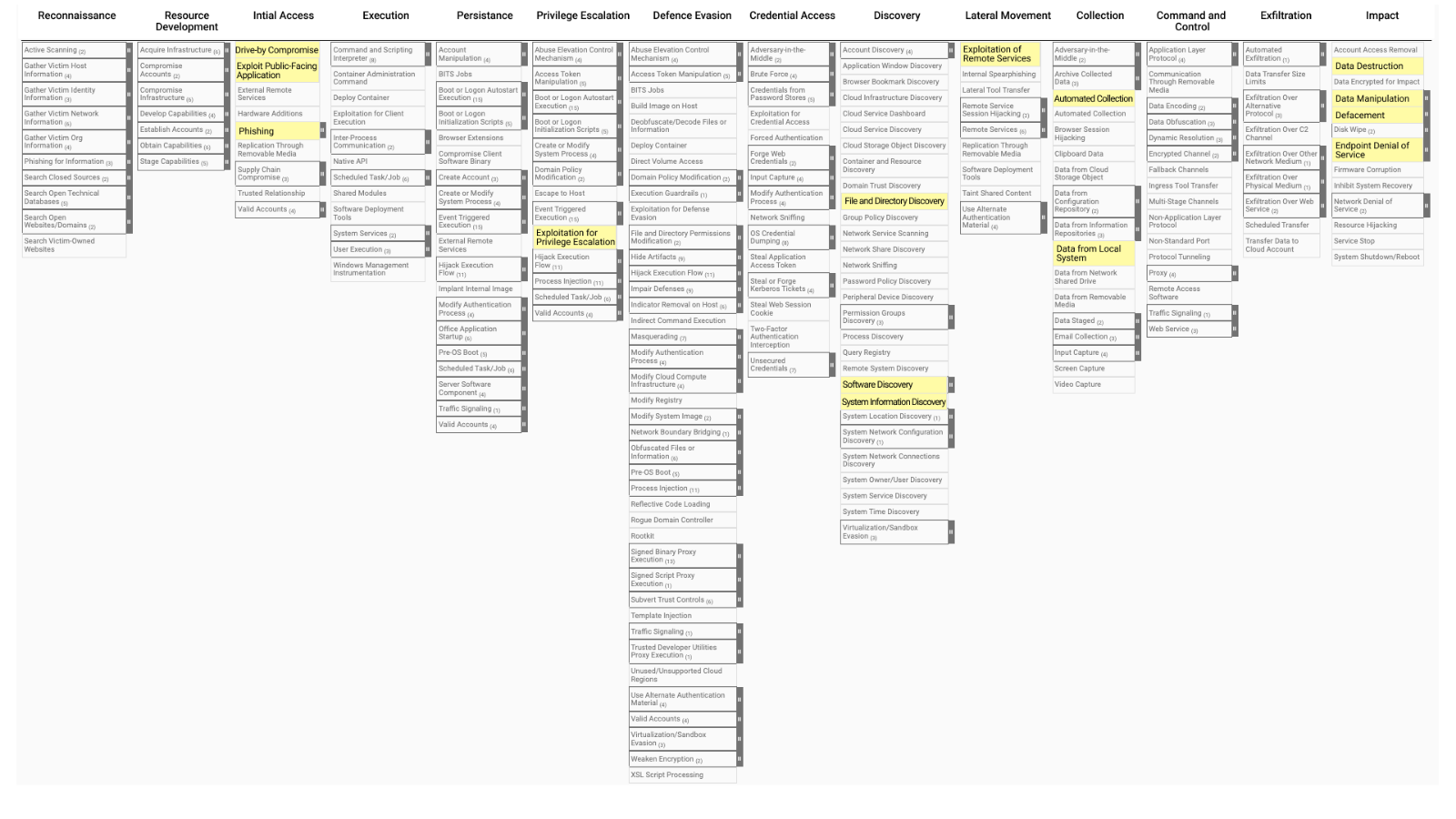
Tactics and Techniques with Associated CVEs
This list of free MITRE ATT&CK resources and tools is by no means exhaustive. Feel free to explore further and visit the websites mentioned in the article to discover all the tools, guides, and resources available.