
The widespread adoption of remote work in recent months has further reinforced the trend toward mobility within companies.
From small and medium-sized businesses to large corporations, all must contend with an increase in cyber risks due to workstations that are beyond the control of technical teams, more frequent external connections, and employees who lack awareness of IT risks and are left to their own devices…
These issues were already arising for organizations operating internationally, or those with a significant number of employees who regularly work off-site (sales representatives, consultants, etc.)
Managing such a dispersed IT infrastructure can quickly become a daunting task for CISOs: How can network security be ensured in this context? How can so many mobile and remote workstations—potential sources of vulnerabilities—be monitored?
EDR is one possible initial response to these questions.
What is an EDR? What does it offer that antivirus software doesn't?
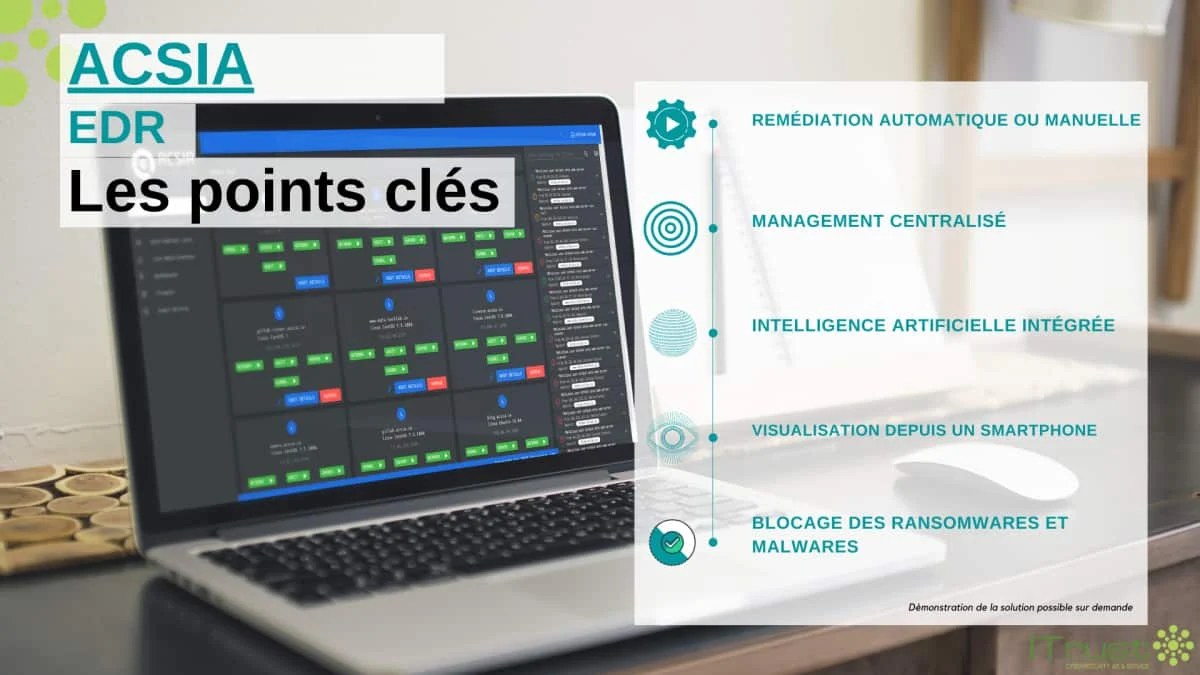
The Endpoint Detection RResponse is a cybersecurity tool designed to detect threats on an endpoint. It therefore operates directly on devices, servers, or workstations. These programs are considered the successor to traditional antivirus software, which is becoming increasingly obsolete.
These solutions rely on databases of known viruses to identify threats. EDR solutions take a much more proactive approach that is better suited to a changing work environment, especially given the steady rise in ransomware attacks.
They are based on artificial intelligence algorithms. They learn the “normal,” typical, and legitimate behavior of users on your network and take immediate action if users deviate from it. As a result, EDR will protect you against all threats, both known and unknown.
An EDR typically allows you to:
- Real-time incident response, 7 days a week, 24 hours a day
- Remote Asset Monitoring
- An action performed through an agent, so even without having advanced administrator privileges
- Monitoring sensitive assets that would be difficult to scan using traditional vulnerability management methods
- Detection of unknown, undocumented threats using artificial intelligence algorithms
For example, in the context of remote work :
> Let's say one of your employees accesses your network using an unauthorized device that is, unfortunately, infected with malware. (Typically a personal or family computer)
> The virus, taking advantage of this vulnerability, will naturally seek to spread throughout your entire IT system.
> If the other devices on your network are equipped with EDR software, it will detect the virus’s attempt to spread. Since the software is designed to operate at the device level, it can automatically trigger a remediation action—in this case, neutralizing the malware that was attempting to spread.
Without any manual intervention, the attack is contained! Machines equipped with EDR are protected.
EDR is one of the essential components of a sound security strategy
Cybersecurity is much like military architecture: the best protection is actually a series of ramparts, moats, and palisades strategically positioned around your information system.

The ramparts of the medieval city of Carcassonne
At ITrust, we have identified three key steps that are crucial for handling a threat:
Prevention >> Detection >> Response.
To build a strong defense, we therefore recommend that you find tools that meet these three needs.
The prevention phase can be carried out through regular audits, as well as automated vulnerability scans . Above all, it helps prevent the most common security breaches.
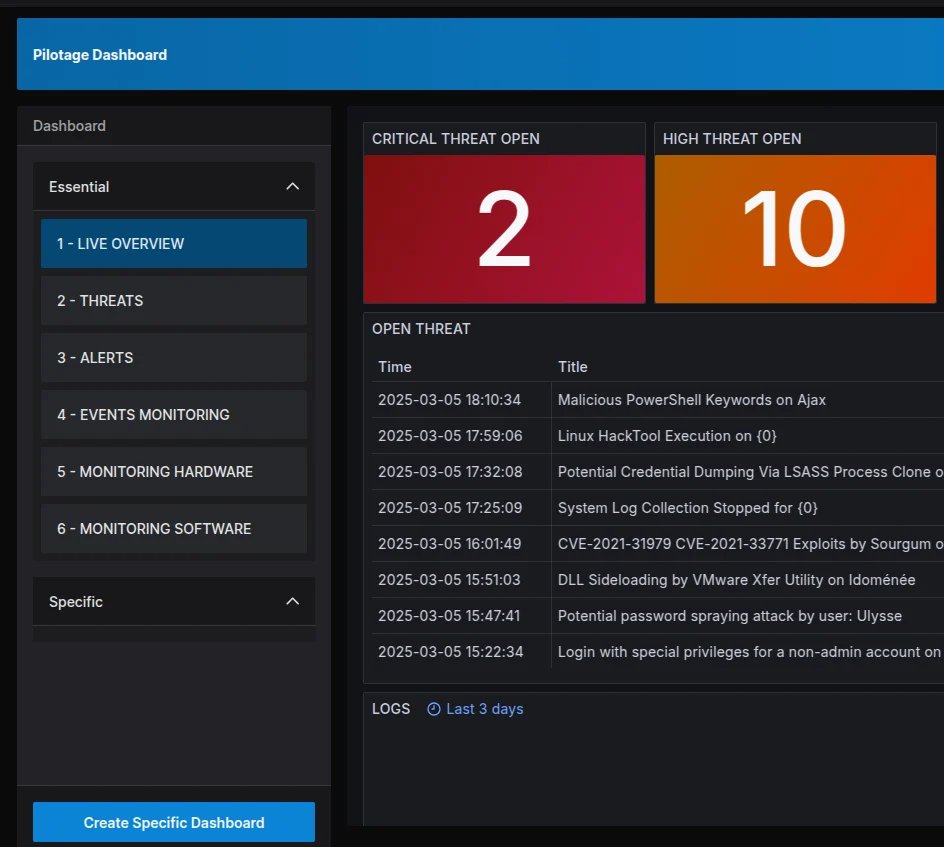
The anomaly detection phase and the response phase can be partially managed by an EDR, typically ACSIA, at the monitored terminal.
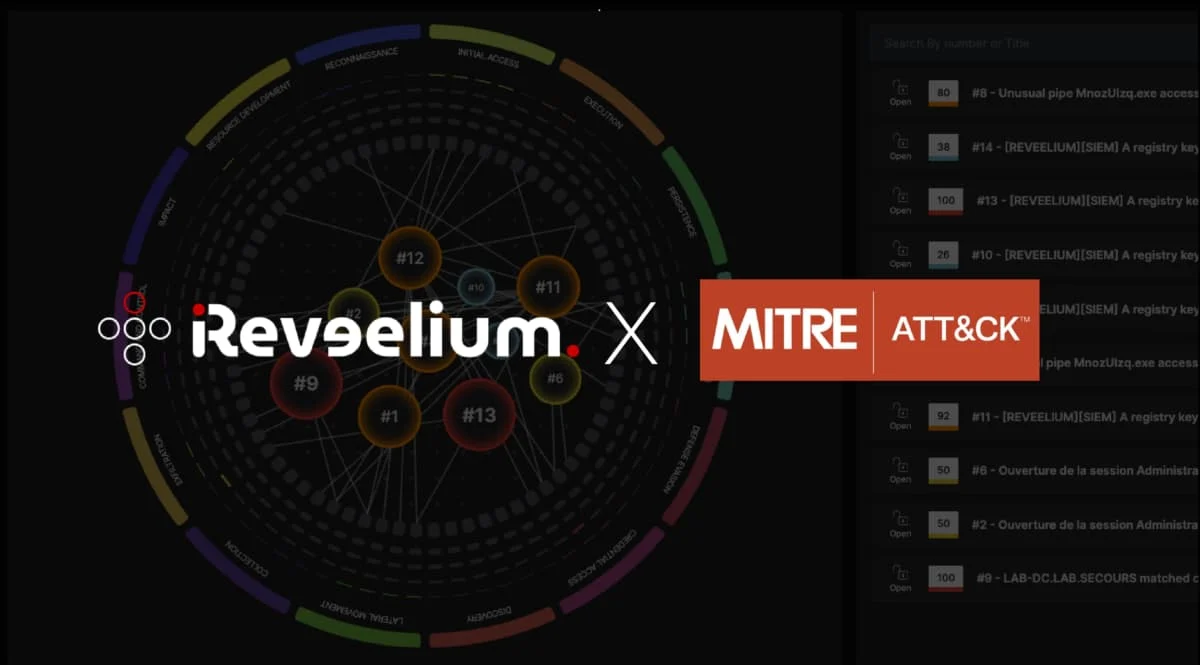
The SOC (Security Operations Center ) is also involved in these phases of alert management. By deploying a team of analysts and cybersecurity tools, the SOC enables continuous monitoring of your entire IT infrastructure. Using tools such as the REVEELIUM UEBA SIEM, ITrust’s SOC, for example, leverages multiple log sources (servers, web, firewalls, etc.) to identify abnormal behavior. Our analysts will also define detection rules specific to your business to provide even more granular monitoring of your network.