

SOC EVOLUTION
The evolution of the SOC over the years
The evolution of Security Operations Centers (SOCs) reflects the significant development of threats, as well as the growing cybersecurity needs and requirements. Initially focused on monitoring IT systems to detect isolated incidents, SOCs have progressively integrated advanced technologies to address the complexity of cyberattacks. Furthermore, the rise of persistent threats, targeted attacks, and the need for rapid response have transformed these centers into true strategic hubs, delivering proactive and continuous protection for digital infrastructures.
Availability Monitoring
Before 1995
NOC (Network Operations Center)
NOCs were primarily used to manage network alerts, monitor network devices, and analyze malicious code. These centers were mainly implemented in military and government institutions.
Reactive Monitoring
1996 – 2000
NSOC/SOC V1 (Security Operations Center Version 1)
The SOC began introducing security solutions such as antivirus software, Intrusion Detection Systems (IDS), and firewalls. Enterprises and banks joined the space alongside military and government bodies.
2001-2006
SOC V2
Introduction of vulnerability management, stateful inspection, anti-spam systems, and Intrusion Prevention Systems (IPS). This phase continued to involve large enterprises, banks, and governments.
Proactive Monitoring
2007-2013
SOC V3
The SOC became more sophisticated with capabilities such as Data Loss Prevention (DLP), protection against Advanced Persistent Threats (APTs), Security Information and Event Management (SIEM) systems, and Security Operations (SecOps). New sectors such as pharmaceuticals and mid-market companies adopted the SOC model.
Proactive Monitoring with Automation
2013-2015
Next Gen SOC
Introduction of advanced concepts such as cloud security, User and Entity Behavior Analytics (UEBA), Threat Intelligence Platforms (TIP), sandboxing, and BYOD (Bring Your Own Device) security management. All sectors are now involved.
2015-2024
Cyber Defense Center (CDC), CFC/CSOC
SOCs are evolving into cyber defense centers leveraging advanced technologies such as Big Data, Security Orchestration, Automation and Response (SOAR), deception technology, Endpoint Detection and Response (EDR), and cloud-native SIEMs. This stage encompasses all industries, including connected devices (IoT/IIoT), smart homes, and connected vehicles.
Detailed breakdown of Security Operations Center evolution since the 1990s
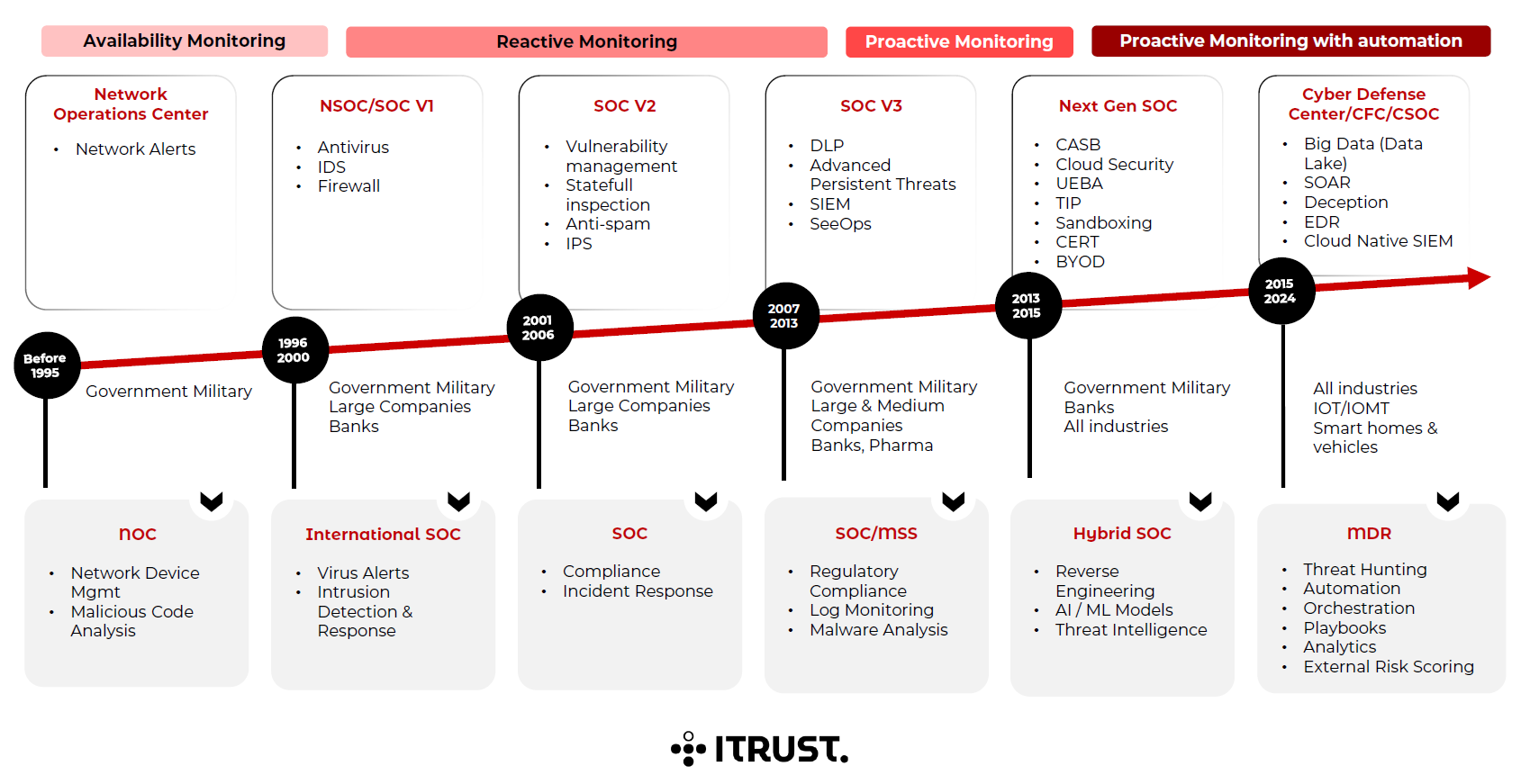
The diagram illustrates the evolution of Security Operations Centers (SOCs) over time, showing how their roles and capabilities have progressed from the 1990s to the present day.